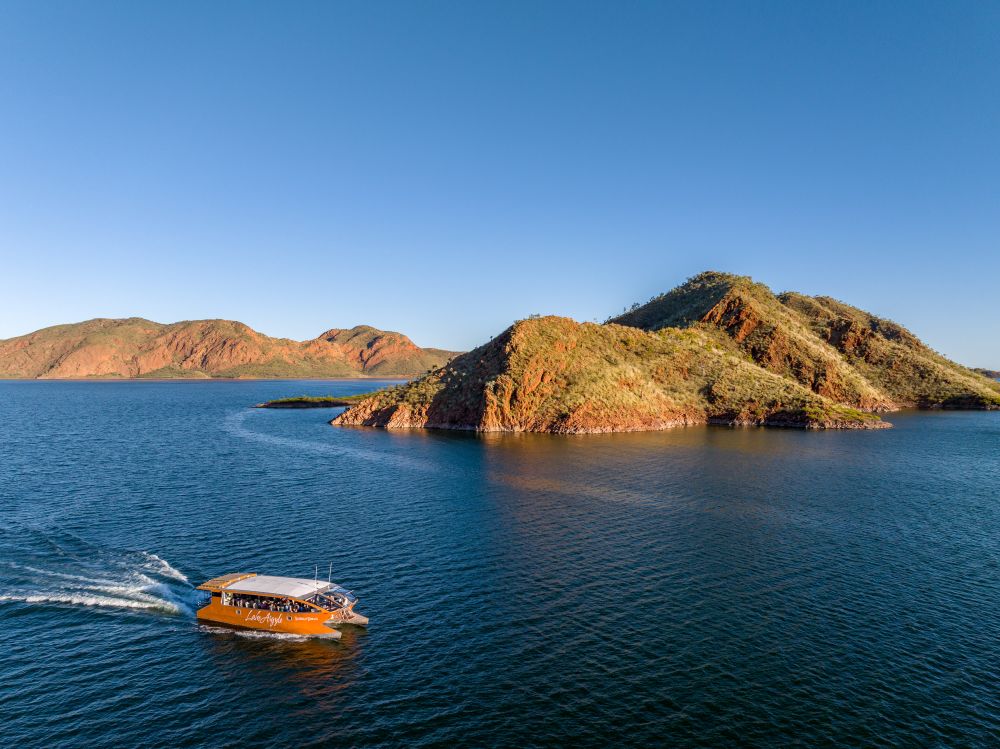
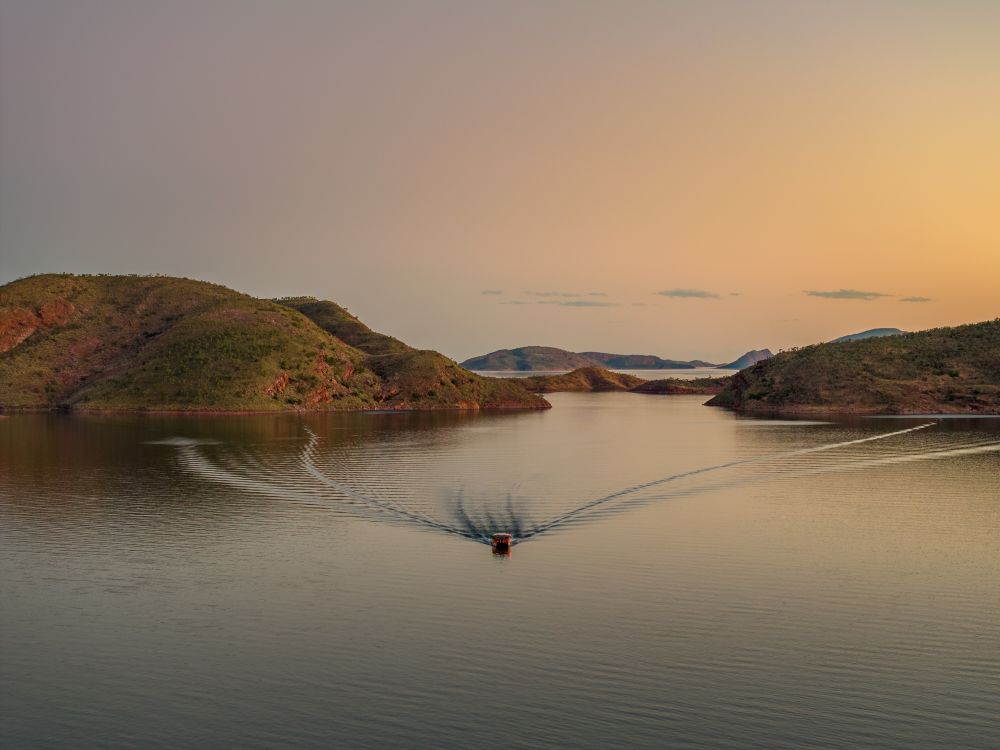
Famous for its infinity pool and stunning views, Discovery Resorts – Lake Argyle offers everything from camping and caravan sites to cabins. Explore the lake’s remote bays and islands on aboard our Kimberley Durack tour, and immerse yourself in the beauty of Australia’s second-largest freshwater lake.
Like the rest of Australia’s ‘top end,’ the Kimberley has two distinct seasons; a tropical ‘wet’ season that runs from October to March, and a tropical ‘dry’ season from April to September.
The Wet Season
While it's normal for there to be monsoonal rains throughout the wet season, it’s more accurate to say that the majority of the region's 500-850mm of annual rainfall usually happens around February and March.
At worst, this can lead to some of the more remote unsealed roads being unpassable, and some of the smaller national parks and tours being closed, but for the most part, the Kimberley remains accessible throughout this time of year.
Locals refer to the period from January to April as the ‘Waterfall Season,’ when a lot of the Kimberley’s rejuvenation and restoration occurs in the floodplains of the regions’ many rivers and creeks, causing countless gorges and waterfalls to spring to life.
If you’re not afraid of some thunder and lightning, the Waterfall Season is the best time of year to witness spectacular light shows over world famous drops like Mitchell Falls, King George, and Revolver Falls, which hug Lake Aryle’s western shoreline inside the Carr Boyd Ranges.
The Dry Season
From April to September, when the southern part of Australia is getting the majority of its rainfall, the Kimberley dries up. This means that all national parks and major tours are open and fully operational.
If you plan on visiting during this time, it’s always important to book ahead as accommodation and activities can be quickly snapped up.
While the range in temperature can vary between locations, 340 days of recorded sunshine per year; distinct wet and dry seasons, high humidity and occasional heavy downpours mean that the Kimberley climate can fairly be described as ‘tropical monsoonal.’
In Broome, known colloquially as the western gateway to the Kimberley, average temperatures range from a fairly consistent 25°C to 32°C throughout the year, with heavy rainfalls from November to April, and warm sunny days from May to October.
In Kununurra to the east – only a short drive from Lake Argyle - average temps are slightly more variable from 20°C to 36°C. High humidity and heavy rainfall characterize the wet season from November to April, while May to October is all about warm to hot days and cool breezy nights.
Be aware that the hottest recorded days in the Kimberley are well above 40°C (104°F) so be sure to a) carry plenty of water with you whenever you step outside, and b) always check the local weather forecast, especially if your journey involves being out on the water or on a medium to long hike. People have been known to wander off, become dehydrated, get lost and expire in these types of conditions.
The short answer to this is that the Kimberley is a massive and geologically diverse region. Divided into two regions (East and West) it covers 423,517 square kilometres by area, which makes it equivalent in size to European countries like Belgium and Holland!
To continue comparisons to the European continent, the population of the region is sparse at only 40,000 permanent residents – about the same as Europe’s smallest principality, Liechtenstein.
Given the sheer size of the region, as described above, you could spend weeks and months exploring the Kimberley if you so desired.
For most people this length of stay is not possible, so a good couple of weeks is highly recommended. If even this amount of time is not feasible, there’s plenty you can achieve during shorter stays.
It’s important to remember however, because of the remoteness of the Kimberley, the distances needed to travel, and the reliance on conditions depending on the time of year you visit, to always build in some contingency during any Kimberley trip.
As a minimum, allow yourself 5-6 days to explore places like Lake Argyle, where the amount of exploration you can do is only limited by your imagination. For those self-driving and not arriving via one of the local airports, one week would give you enough time to have an authentic and memorable Kimberley adventure.
Part of the Kimberley’s appeal is in its diverse and rich history of immigration and settlement, which dates back tens of thousands of years when you include the original Indigenous inhabitants.
Made up of several language groups, each with their own unique culture, traditions and beliefs, the earliest Indigenous Aboriginal groups include the Bardi, Wororra, Wunambal and Gooniyandi peoples, whose ancestral roots remain clear in the region today.
Since the 1800s, like much of Australia, the Kimberley has become home to people of non-Indigenous descent including European settlers and many from Southeast Asian destinations. This racial and cultural mix continues to be celebrated and preserved.
While arriving in the Kimberley can be an adventure of its own, your reward for getting here should include a mix of relaxation, adventure, wildlife spotting and discovery. As mentioned already, you could spend weeks or even months delving into the Kimberley, so here are a few of the Kimberley’s most popular attractions:
The easy answer to this is yes, but tours are available that will take you to same places, so this question does depend in part on your timeframes and budget.
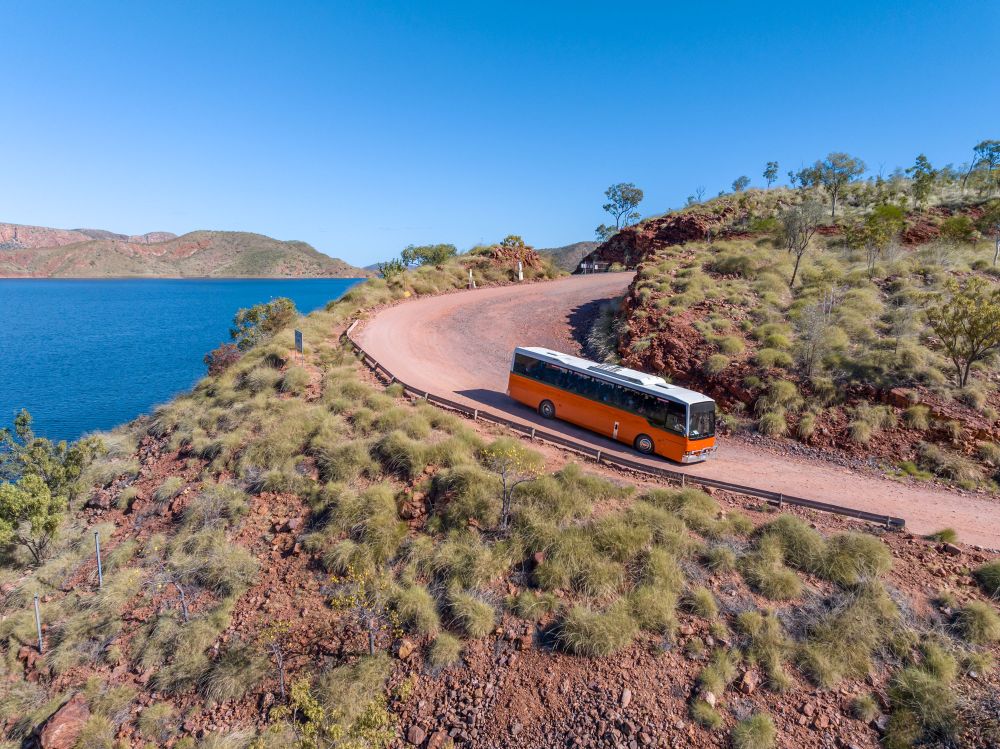
If you are travelling the Gibb River Road, a high clearance 4WD drive is the only way to go. You can drive through the Kimberley along the sealed Great Northern Highway to get to Kununurra, but even the attractions on this road (like the Bungle Bungles) require a 4WD to enter.
It’s always important to check for signposted warning about crocodiles all over the Kimberley, because the short answer is that saltwater crocodiles do live and breed all over this region.
Factors that could impact the safety of swimming in the Kimberley include changes in water levels the known presence of dangerous wildlife, and the quality of the water itself. It's important to be aware of any potential risks and take necessary precautions, such as avoiding swimming after heavy rainfall or checking for any recent croc or shark sightings.
At Lake Argyle, although it is home to the world’s largest population of Johnston River Freshwater Crocodiles (Crocodyllus Johnstoni), these prehistoric creatures are timid and generally considered not dangerous to humans. The locals at Lake Argyle who swim in these waters respect the fact this is the Crocodiles’ natural habitat.
Based on the last two answers, it’s important to bring your common sense and a healthy respect for the natural wildlife and environment to the Kimberley.
To increase your comfort levels, be sure to pack with the weather and practicality in mind. Therefore, we highly recommend all visitors bring the following items:
Importantly, for those who are self-driving, always ensure you have a plentiful supply of water, extra petrol, spare tyres, a torch, radio and food supplies in case of a breakdown or emergency.
Discovery Resorts - Lake Argyle has been a favourite stop for Kimberley explorers since it first came into being in the early 1970s.
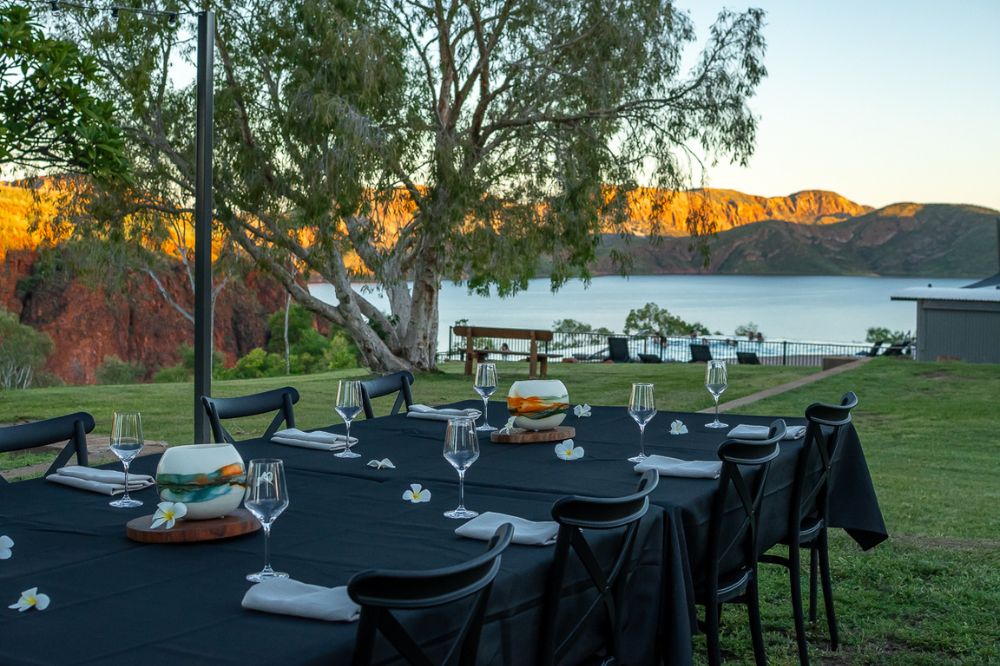
Favoured for its prime location, a wide range of luxury and camping accommodation as well as its breathtaking natural beauty, it offers superb facilities, loads of well organised tours, a café and garden bar, and an infinity pool that is continually recognised on global best-of lists.
The ideal place to begin or end your travels, Lake Argyle is a short drive from Lake Kununurra and something of a bridge between the Northern Territory and the East Kimberley.
With calm waters surrounding over 70 islands, Lake Argyle is a natural playground perfect for swimming, water sports, fishing, and boating. Surrounded by a magnificent landscape suited for beginner to advanced level bushwalking, mountain biking, and wildlife spotting, travellers are rewarded for their day's exploration with a dip in the spectacular infinity pool and a cold drink from the bar.
For general information, accommodation inquiries/bookings, and tour information/bookings please call or email us.
Please note: Restaurant bookings for dinner are not required. Thank you.
Stay up to date with park news, specials and events
Discovery Parks would like to Acknowledge the Traditional Owners of Australia and pay our respects to Elders past and present. We recognise their unique connections to the land and water and thank them for protecting and caring for Country across countless generations.